ServicesFilter replacement
Filter Replacement and Maintenance in Mesquite
We change cartridges, membranes and media on the filtration equipment already in your home, check the seals and pressures while we are there, and tell you plainly what is due now and what can wait. You get water that tastes right again from a system that keeps doing its job.
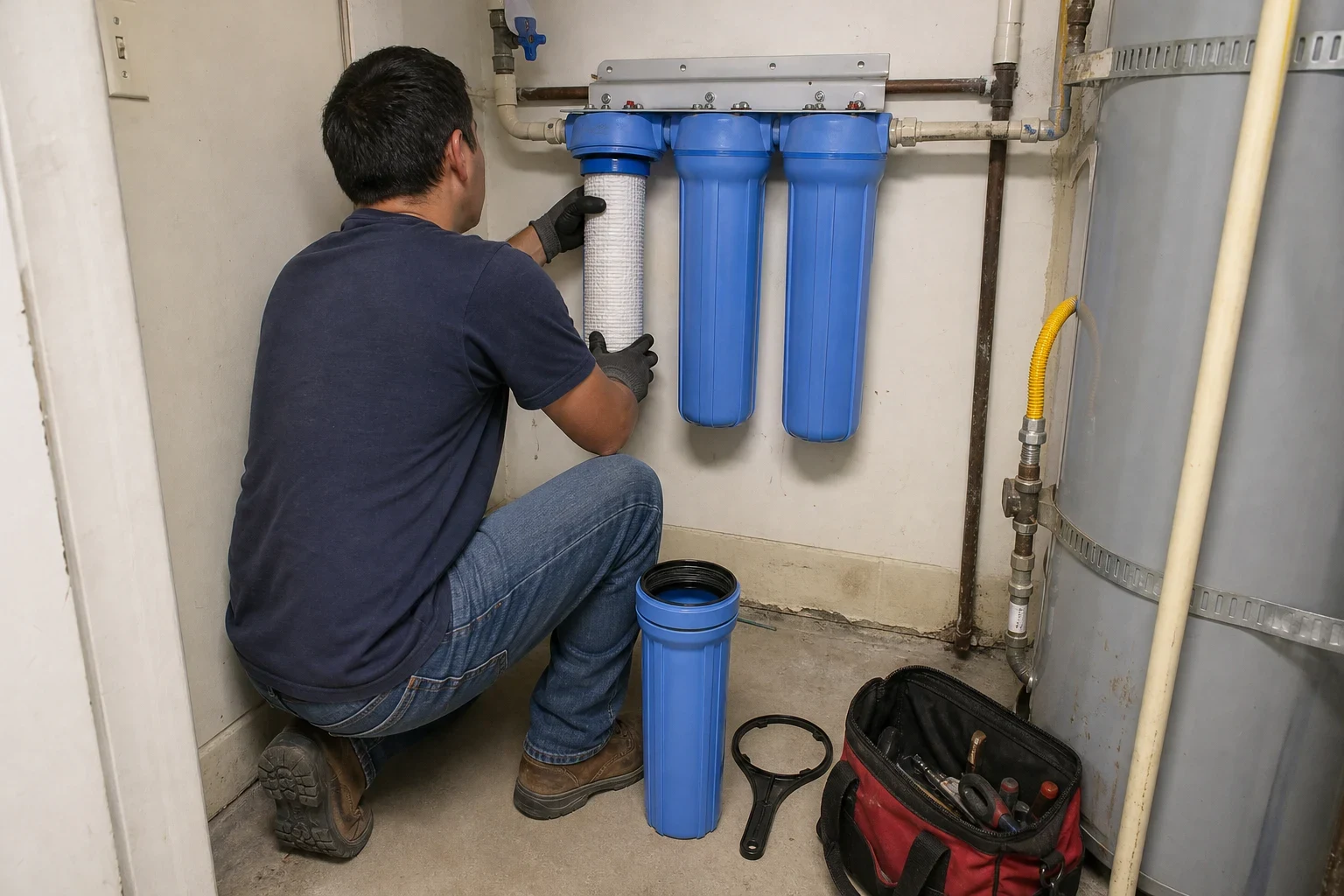
Why filters need regular attention
Every filter works by catching or adsorbing something, and every filter eventually fills up. A sediment cartridge loads with particles until water pressure drops. A carbon block runs out of adsorption sites and starts letting chlorine taste through. A reverse osmosis membrane slowly fouls and passes more dissolved solids. None of this is a defect. It is how the media works, and it is why a system that was excellent on install day can be doing very little three years later.
We service whole-house carbon systems, under-sink reverse osmosis units, and iron and sediment filters, including equipment another company installed. We treat the visit like we are working on a neighbor's kitchen: shoes covered, towels under the sink, old cartridges bagged and taken away, and a straight answer about what your system actually needs.
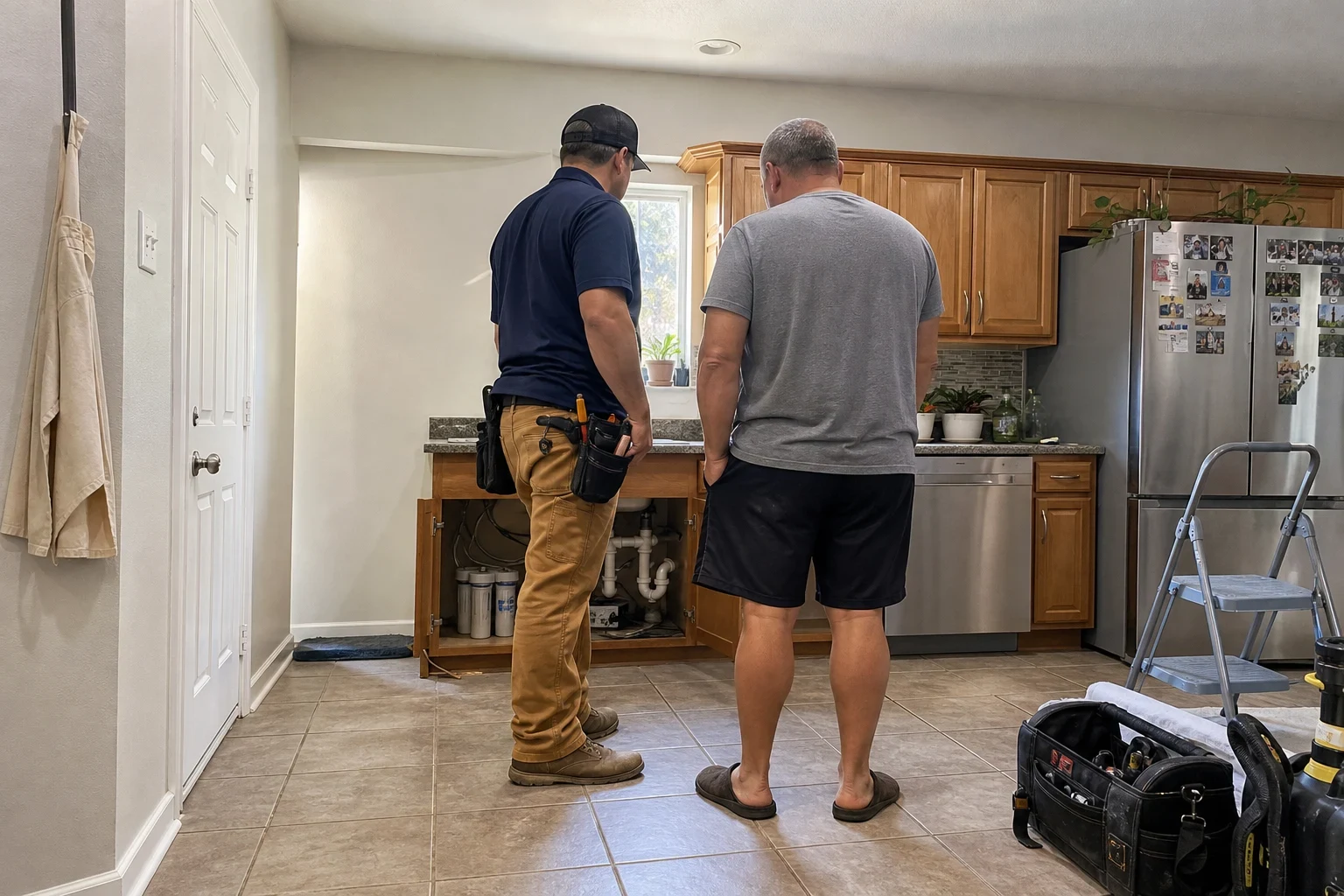
What we do on a service call
- 01
Fresh cartridges, correctly sized
Old sediment prefilters, carbon blocks and polishing postfilters come out, and new ones go in that match the housing length, diameter and micron rating your system was built around. On tank systems filled with granular carbon or iron media, we judge whether the bed needs replacing or can run longer.
- 02
Membrane performance reading
A handheld TDS meter compares dissolved solids in the incoming supply with the water at the RO faucet. The percentage the membrane removes shows whether it still performs, so a new membrane gets bought because the numbers call for it, not because a date passed.
- 03
Seal inspection
Most slow leaks begin at a housing O-ring that has gone flat or brittle. We look at each ring, swap the worn ones and give every seal a thin coat of food-grade silicone, so the sump closes tight by hand without anyone cranking on it.
- 04
Gauges and tank air charge
Where your system has pressure gauges, we compare the inlet and outlet readings. On RO units we test the storage tank's air pre-charge, because a tank that has lost its air gives a weak stream at the faucet even when every filter is brand new.
- 05
Sanitize and flush
RO housings and tubing get sanitized while the system is open. New carbon is flushed until the fine black dust stops showing, so the first glass you pour is clear and clean-tasting.
Questions about Filter replacement?
Call(972) 853-4977When your filters are past due
The pool smell returns
Spent carbon stops grabbing chlorine, and the disinfectant odor in city water comes back. It returns a little at a time, which is why people get used to it without noticing.
Pressure has slowly faded
A sediment cartridge packed with particles throttles flow to every fixture downstream. A drop that crept in over months rather than overnight usually sends us straight to the prefilter.
The drinking tap barely trickles
Slow flow from the RO faucet has three usual causes: a clogged prefilter, a fouled membrane or a storage tank short on air. We check all three, since each one is fixed differently.
Water under the sink
A damp cabinet floor or beads of water on a housing usually trace back to a worn O-ring or a hairline crack in the sump. Dealing with it early saves the particleboard underneath.
Nobody knows the last change date
If the date is a mystery, the media has almost certainly outlived its capacity. Long Texas summers warm the cabinet and speed bacterial growth in old cartridges, so closing a long gap is worth it.
How the visit runs
- 1
Start with a call
Describe your equipment and anything you have noticed, such as taste, flow or a drip. If you can read us the brand and model from the label on the housings, we can load the correct cartridges and seals before we head out.
- 2
Isolate and open
We shut the inlet valve or switch to bypass, bleed off the pressure and unscrew each housing. You get to see the old cartridges, since their color and buildup tell a story about what your water carries.
- 3
Replace, seal and test
New media goes in, seals are inspected or swapped, and the system is repressurized slowly so trapped air escapes. Then we check flow, look over every joint for drips and take a TDS reading on RO units.
- 4
Date it and clean up
Each housing gets a label with the day's date, and you get a short written schedule for what comes next. The old filters leave with us, and the cabinet gets wiped out before we go.
What sets the cost of filter service
The price depends mostly on how many cartridges your system uses and what they are made of. We give you a clear line-item estimate by phone before the visit, and if we find something extra on site, we explain it and ask before doing it.
- Number and type of stages
- A single sediment housing is simpler than a five-stage RO unit. Carbon block, catalytic carbon and specialty cartridges each cost differently.
- Membrane or media replacement
- RO membranes and tank media are the larger parts and are not due every visit. Testing tells us whether they need replacing now.
- Condition of seals and housings
- Worn O-rings are minor. A cracked sump or corroded fitting adds parts and time.
- Brand and cartridge availability
- Standard housing sizes take common cartridges. Proprietary systems may need brand-specific parts.
Questions about cartridge and membrane changes
How long do the cartridges in my system last?
It comes down to the stage and to how many gallons your family runs through it each day. Sediment and carbon cartridges commonly give six to twelve months of service, while a reverse osmosis membrane typically lasts several times longer. Rather than trusting the date on the package, we read the spent cartridges as they come out and build your schedule from what they show.
Can you service a system you did not install?
Yes. Most housings take standard cartridge sizes, and equipment from other installers is a regular part of our work. If your unit turns out to need a proprietary part, we tell you before ordering anything.
Do I need to be home for the visit?
Yes, please plan for someone to be there. We need access to the shutoff and the equipment, and we want to show you what came out of the housings so you can see the reason for each change.
Will my water be off for long?
Usually not for long. On whole-house systems we use the bypass valve when one is installed, so unfiltered water keeps running during the change. Work on an RO unit only affects the separate drinking-water faucet.
What if my water still tastes off after new filters?
Then the filters may not suit the problem. We can arrange water testing to find out what is actually in your water and whether a different setup, such as iron and sediment filtration or whole-house carbon filtration, would serve you better.
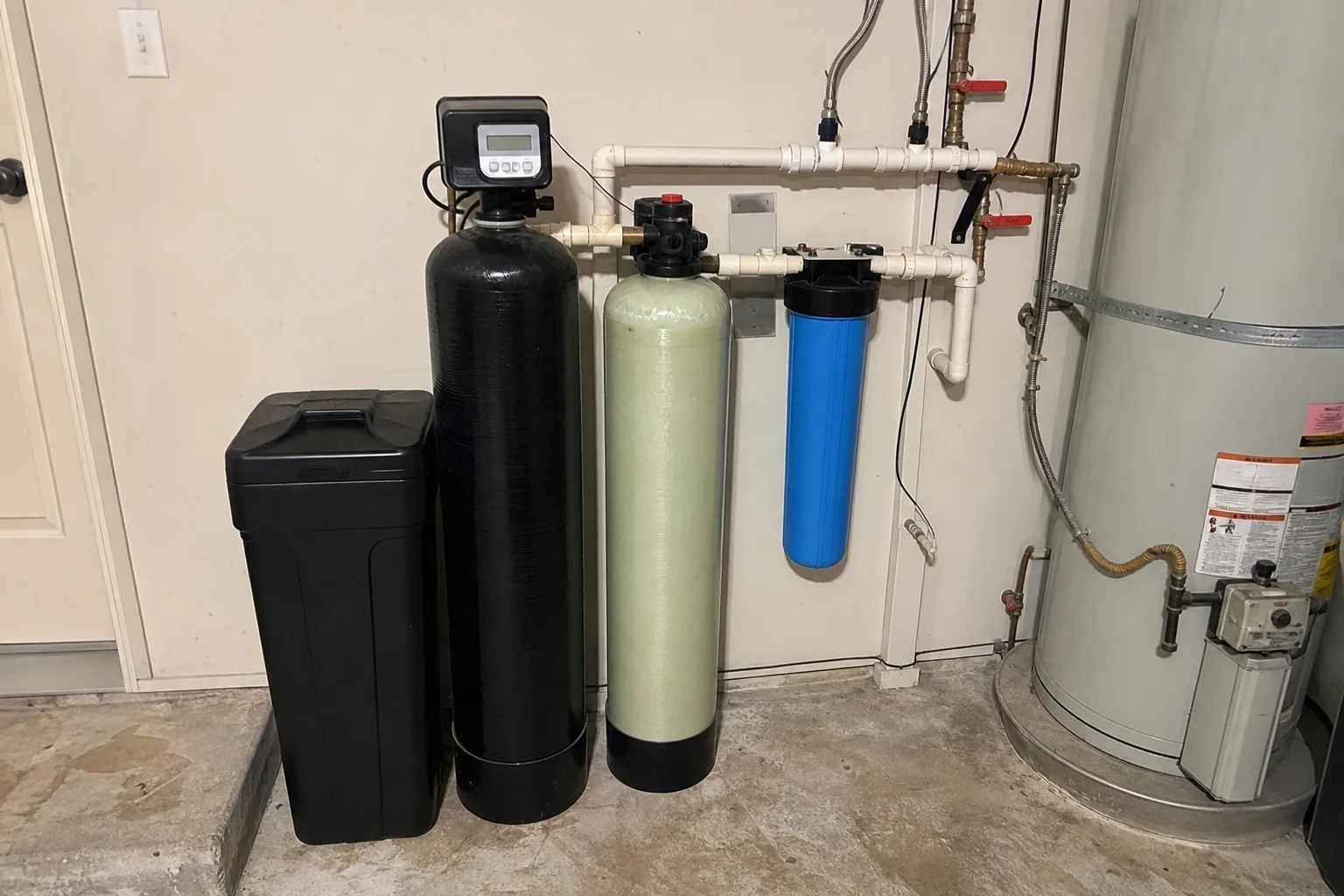
Get your filters back on schedule
Let us know what equipment sits under your sink or in the garage and roughly when someone last changed it. We will walk through what is probably due and give you a clear estimate before a single housing comes off.