ServicesUnder-sink reverse osmosis
Under-Sink Reverse Osmosis in Mesquite
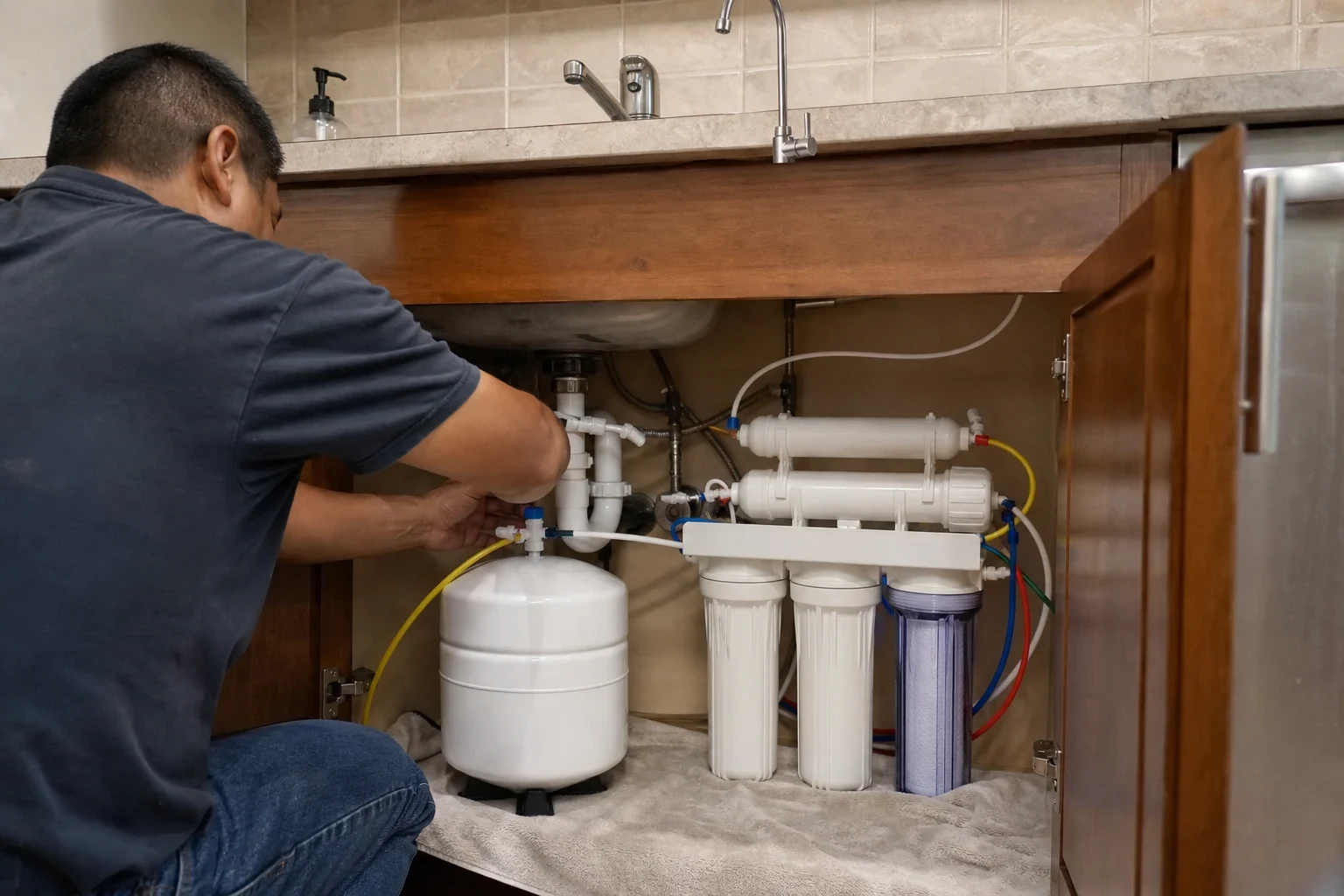
We install under-sink reverse osmosis systems that give your kitchen a dedicated tap of low-mineral, low-contaminant water for drinking, coffee and cooking. We size each system from your water test and your sink cabinet, then show you how every filter stage works before we leave.
How Reverse Osmosis Works and Who It Suits
At the center sits a polyamide membrane rolled around a core tube. Its pores let water molecules through and send dissolved salts, lead, nitrates, fluoride and most other ions down the drain. Ahead of the membrane are a sediment prefilter and a carbon block, since grit can tear it and chlorine or chloramine damages the polyamide. After it, a carbon polishing filter removes any flavor the water picks up while sitting in the storage tank.
RO fits best when the worry is the water you drink and cook with: older plumbing in the house, a test with high total dissolved solids, or a household buying bottled water because the tap tastes chemical or flat. It treats only one faucet, so showers, bathroom sinks and the washer get the same water as before. If the issue is a disinfectant smell in the shower, whole-house carbon filtration treats the water where it comes into the house, and an RO unit can be added in the kitchen later.
What Your Installation Includes
A water test before we quote
We check pressure, total dissolved solids and hardness at your tap first. Those numbers decide membrane size, whether a booster pump is needed, and whether a softener or sediment filter should come first to protect the membrane.
Prefilters, membrane and polishing filter
A standard system runs four or five stages: sediment, carbon block, the RO membrane, and a post carbon filter. We tell you what each stage catches and roughly when it will be due for a swap.
Its own faucet and a proper drain tie-in
The RO faucet sits on the sink deck or countertop, separate from your main faucet. The brine line ties into the drain with a saddle fitting above the trap, and where code or your setup calls for it, we use an air gap faucet so drain water cannot back up into the system.
Tank or tankless, planned around your cabinet
Tank systems store a few gallons for fast flow; tankless units save space and send less water to the drain. We measure the cabinet around the disposal and garbage bin before recommending either.
Optional ice maker and fridge line
If you want RO water in your refrigerator, we run a line to it and set the pressure so the dispenser and ice maker work properly.
Signs Under-Sink RO Makes Sense for Your Home
- You are hauling bottled water
- If your kitchen is stacked with jugs and cases, an RO faucet replaces them with water drawn from your own line.
- Your home has older plumbing
- Homes built before the 1986 federal lead ban can have lead solder on copper joints. RO membranes reduce lead well, which is why we suggest testing a first-draw sample from homes of that age.
- Coffee and ice taste off
- A chemical or mineral note in coffee, tea or ice usually comes from disinfectant residual and dissolved solids. Carbon handles the first and the membrane handles the second.
- White crust in kettles
- Scale on a kettle element or coffee maker shows dissolved minerals. RO water leaves far less behind.
- A test flagged something specific
- High nitrates, fluoride or total dissolved solids on a lab report are exactly what RO is built to reduce.
How the Install Day Runs
- 1
Test and measure
We read your water pressure and TDS at the kitchen tap and look at the space under the sink. If pressure sits below about 40 psi, we plan for a booster pump so the membrane works at its rated output.
- 2
Protect and prep
We clear the cabinet, lay down a mat, and shut off the cold supply. The feed valve goes onto the cold line with a compression fitting, so there is no soldering under your sink.
- 3
Mount, drill and connect
The filter housing mounts to the cabinet wall, the faucet goes into an existing sprayer hole or a new one we drill, and the drain saddle goes in above the trap. Every tubing run is cut square and pushed fully into its fitting.
- 4
Flush and check
New carbon and membranes release fines and preservative, so we flush the system, check every joint for drips, and take a fresh TDS reading so you can see the drop in numbers yourself.
- 5
Walk you through upkeep
We label each housing with its install date and show you how the filters come out. Then we clean up and take the packaging with us.
What Affects the Price
Most of the cost comes from the system's stage count and whether your house needs extra parts to run it well. We give you a written estimate with each part listed before any work starts, so you know exactly what you are approving.
- Tank versus tankless
- Tankless units with built-in pumps cost more up front but take less room and waste less water.
- Water pressure
- Low incoming pressure means adding a booster pump and its power supply.
- Faucet and countertop
- Using an existing sprayer hole is simple. Drilling quartz or granite takes a diamond bit and more time.
- Extra stages and lines
- A remineralization cartridge, a UV stage or a refrigerator line each add parts and labor.
Common Questions About Kitchen RO Systems
- How much water goes to the drain with RO?
- Older units could waste four or more gallons for each gallon of drinking water. Current membranes, paired with a permeate pump, get closer to a ratio of one or two to one. Strong incoming pressure also helps, so we measure it before anything else.
- Will RO strip out the good minerals?
- It does. Calcium and magnesium are rejected by the membrane along with the rest. Food gives most people far more of those minerals than any glass of water would. If water with nothing in it tastes a bit flat to you, a remineralization cartridge placed after the membrane can put a small amount of calcium and magnesium back before the water reaches the faucet.
- How often do the prefilters and membrane get replaced?
- Expect to change the sediment and carbon prefilters every six to twelve months and the membrane every two to three years, depending on your water quality and how much you use. If you would rather not track the dates, our filter replacement and maintenance service does it for you.
- Is there room for it next to my garbage disposal?
- In most kitchens, yes. We take measurements before we quote. When the cabinet is cramped, a tankless model or a slim tank mounted on the side wall usually makes it work.
- Is this something I can install on my own?
- Plenty of homeowners do. The mistakes we most often correct are a drain saddle set below the trap, tubing that was never seated all the way into a fitting, and a membrane damaged because the carbon filter ahead of it was used up. If you want to avoid those, we can take care of the entire install.
Get Better Water at Your Kitchen Tap
Tell us about your sink, your plumbing age and what bothers you about your water. We will explain which RO setup fits and what it involves before you decide, and we work in your kitchen the way we would want a neighbor working in ours.