ServicesWater softeners
Water Softeners in Mesquite, After a Hardness Test
Before anyone mentions equipment, we put a number on your water: the calcium and magnesium it carries, read in grains per gallon. If that number means real scale, we size a softener to your household and install it with a proper bypass and drain. If not, you hear that plainly.
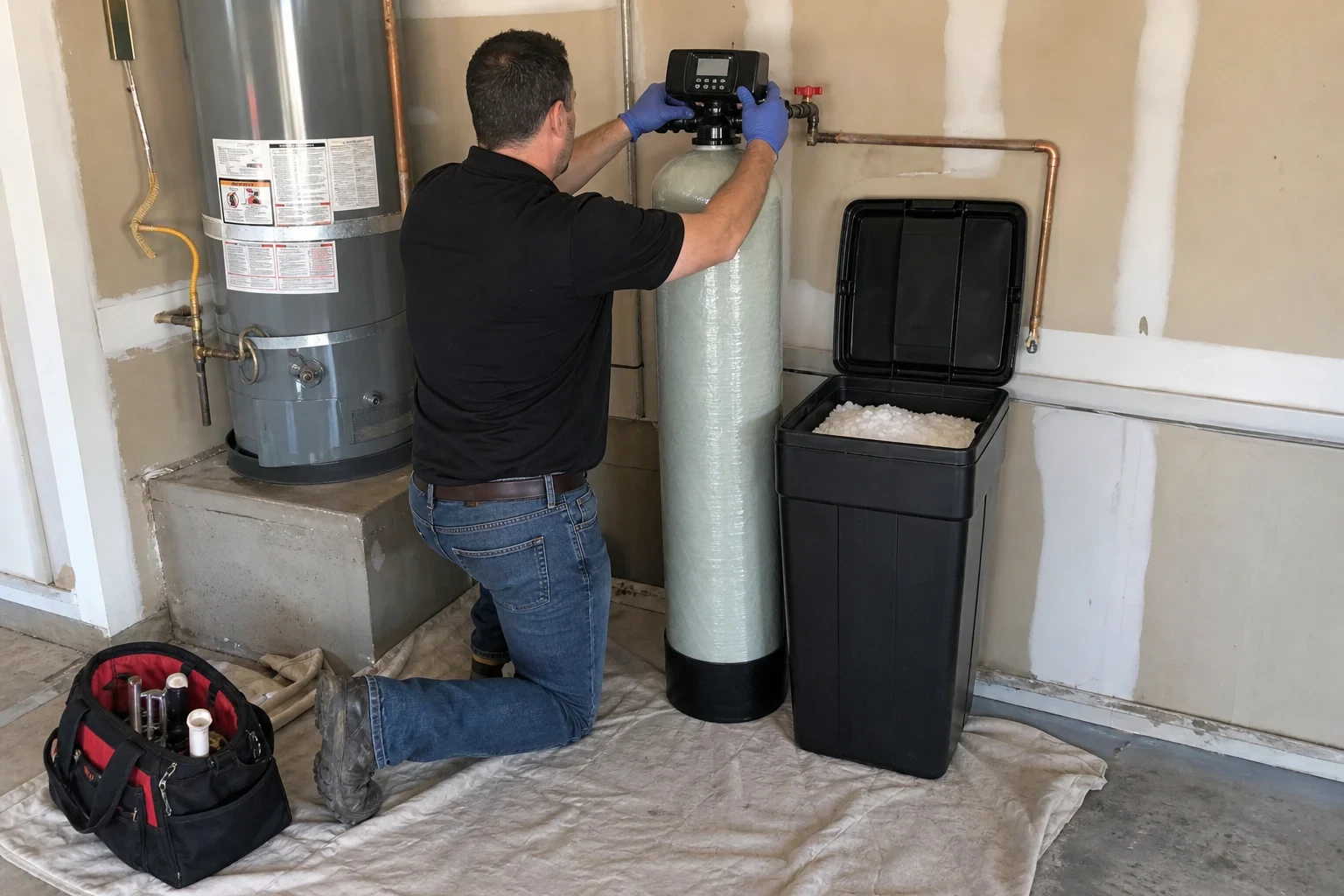
How a softener works and when it earns its place
A water softener is a tank of ion-exchange resin beads. As water passes through, the beads trade sodium or potassium for the calcium and magnesium that cause hardness. Once the beads are saturated, the control head starts a cleaning cycle: brine drawn from the salt tank rinses the resin, carries the captured minerals out to the drain and leaves the beads ready to work again.
That process does a good job on scale, but it isn't free to run. It uses salt, water and a drain connection, and it adds some sodium to the water. So we treat it the way we'd treat it for a neighbor: test first, then decide. A softener makes sense when hardness is high enough to leave crusty deposits on fixtures, shorten water heater life or fight with soap. At lower readings, the cost and upkeep often aren't worth it, and we'll say so.
If the test points to a different issue, such as chlorine taste or rust-colored staining, we'll steer you toward whole-house carbon filtration or iron and sediment filtration instead.
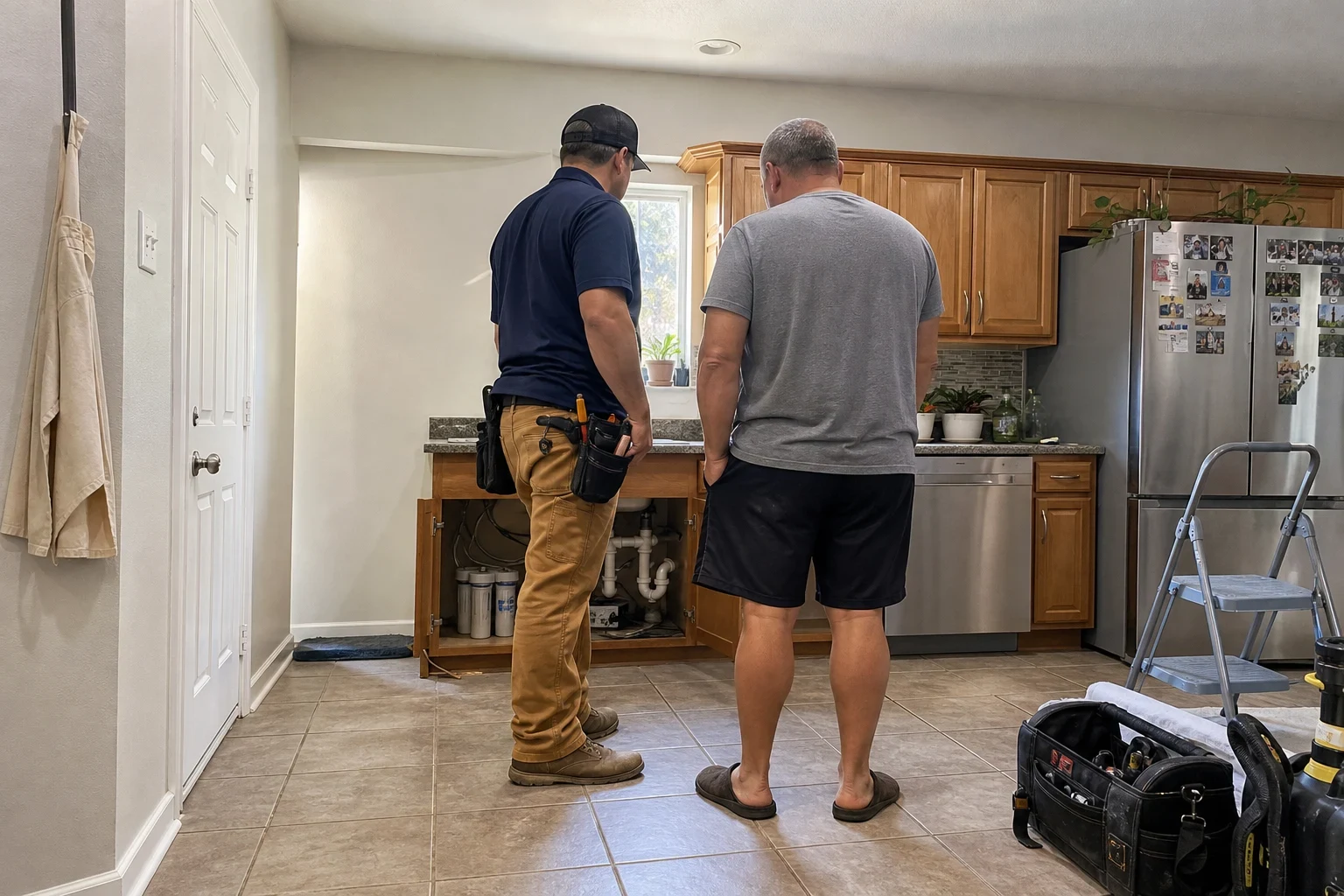
What comes with a softener job
- 01
Testing for hardness and iron
We read total hardness in grains per gallon and look for iron, which gradually fouls the resin in a softener. Those results decide what size system you need, or show that you need none.
- 02
Sized to grain capacity
Your test result and daily water use give us the hardness load per day, and we choose a resin volume that regenerates every few days instead of nightly. Too small a unit burns through salt and water; too large a unit can leave resin sitting idle and stale.
- 03
Control valve that runs on usage
We install metered valves that start regeneration after a set number of gallons have actually passed through, rather than on a calendar. Salt and drain water stay limited to what your household really uses.
- 04
Bypass, drain line and overflow
Each install includes a bypass valve, so the softener can be taken offline while the rest of the house keeps water. An air gap on the drain line stops wastewater from siphoning back, and the brine tank overflow also runs to the drain.
- 05
Pre-filtering when it pays off
Over time chlorine wears down the resin beads. When your water has a noticeable chlorine level, we may suggest a carbon stage in front of the softener so the resin lasts longer.
- 06
Hands-on walkthrough and cleanup
Before leaving, we show you how to refill the salt, read the display on the valve and switch to bypass. We take the packaging and cut pipe with us.
Questions about Water softeners?
Call(972) 853-4977Signs hard water may be worth testing for
White crust on faucets and showerheads
Calcium carbonate builds up where water evaporates. If aerators clog and showerhead jets go crooked within months of cleaning, hardness is a likely cause.
Spotted glasses and a film in the shower
Hard water leaves mineral spots as dishes dry and reacts with soap to form a sticky scum on glass and tile.
Popping noises from the water heater
Mineral deposits collect at the base of a tank heater and pin water beneath them. That trapped water flashes to steam and crackles as the burner fires. The same crust insulates the tank from its heat source, so you pay more for every gallon.
Tankless heater scale errors
Tankless units have narrow heat exchangers that scale quickly. Frequent descaling alerts are a strong reason to check hardness.
Soap that won't lather
Calcium and magnesium tie up soap, so you use more shampoo and detergent and still feel residue on skin and laundry.
How the job runs, from test to soft water
- 1
Test at your tap
We take a sample from a cold-water tap ahead of any existing treatment and measure hardness and iron. You see the numbers and we explain what they mean for scale.
- 2
An honest recommendation
If hardness is low, we tell you a softener isn't worth it and point to what might help instead. If it's high, we size a unit and walk you through the estimate line by line.
- 3
Installation day
We shut off the main, cut into the supply line where it enters your home, usually in the garage, and install the bypass, softener and drain connection. Most installs take part of a day, and we restore water as soon as connections are tested for leaks.
- 4
Programming and first regeneration
We enter your hardness reading and household size into the valve, load salt and run a manual regeneration so the resin starts fresh. Then we retest the softened water to confirm it reads near zero.
What moves the cost of a water softener
Your water chemistry and the layout of your plumbing drive the price more than the name on the tank. Once the hardness test is done, you get a written estimate with the unit, the valve, the plumbing labor and any pre-filter on separate lines, so nothing turns up later that you didn't see first.
- Hardness level and household use
- Higher grains per gallon and more people mean a larger resin tank to keep regeneration intervals reasonable.
- Where the line enters your home
- A ready-made softener loop in the garage keeps labor simple. No loop, a slab entry or a long run to a drain adds pipe and time.
- Iron or chlorine in the water
- If the test shows iron or high chlorine, a pre-filter may be needed to protect the resin, which adds equipment.
- Valve type and salt choice
- Metered digital valves cost more up front than timer valves but use less salt. Potassium chloride instead of sodium chloride raises ongoing supply cost.
Questions about water softeners
Will you always recommend a softener after the test?
No. Plenty of homes have water soft enough that a softener adds cost and upkeep without much payoff. If your reading is low, we'll tell you so and suggest whether anything else, like carbon filtration, fits better.
Does softened water taste salty?
Usually not. The resin swaps a little sodium for every grain of calcium and magnesium it pulls out, so harder starting water ends up with a bit more. At the levels most homes see, that amount sits below what people can taste. If you're watching sodium, you can use potassium chloride, or pair the softener with under-sink reverse osmosis for drinking and cooking water.
How much salt will the softener go through?
Many homes use a bag or two a month. A higher hardness reading, a bigger family or a smaller brine tank all push that number up. Keep salt above the water line in the brine tank, and if the level stops falling for weeks, poke through the crust on top, known as a salt bridge, so brine can form again.
Can a softener remove iron too?
Small amounts of dissolved iron, yes, but it slowly coats the resin and cuts capacity. If your test shows more than a trace, a dedicated stage from our iron and sediment filtration service protects the softener and does that job better.
Does the softener need servicing?
Resin lasts many years with protection from chlorine and iron. The valve, brine tank and any pre-filter benefit from periodic checks, which we cover under filter replacement and maintenance.
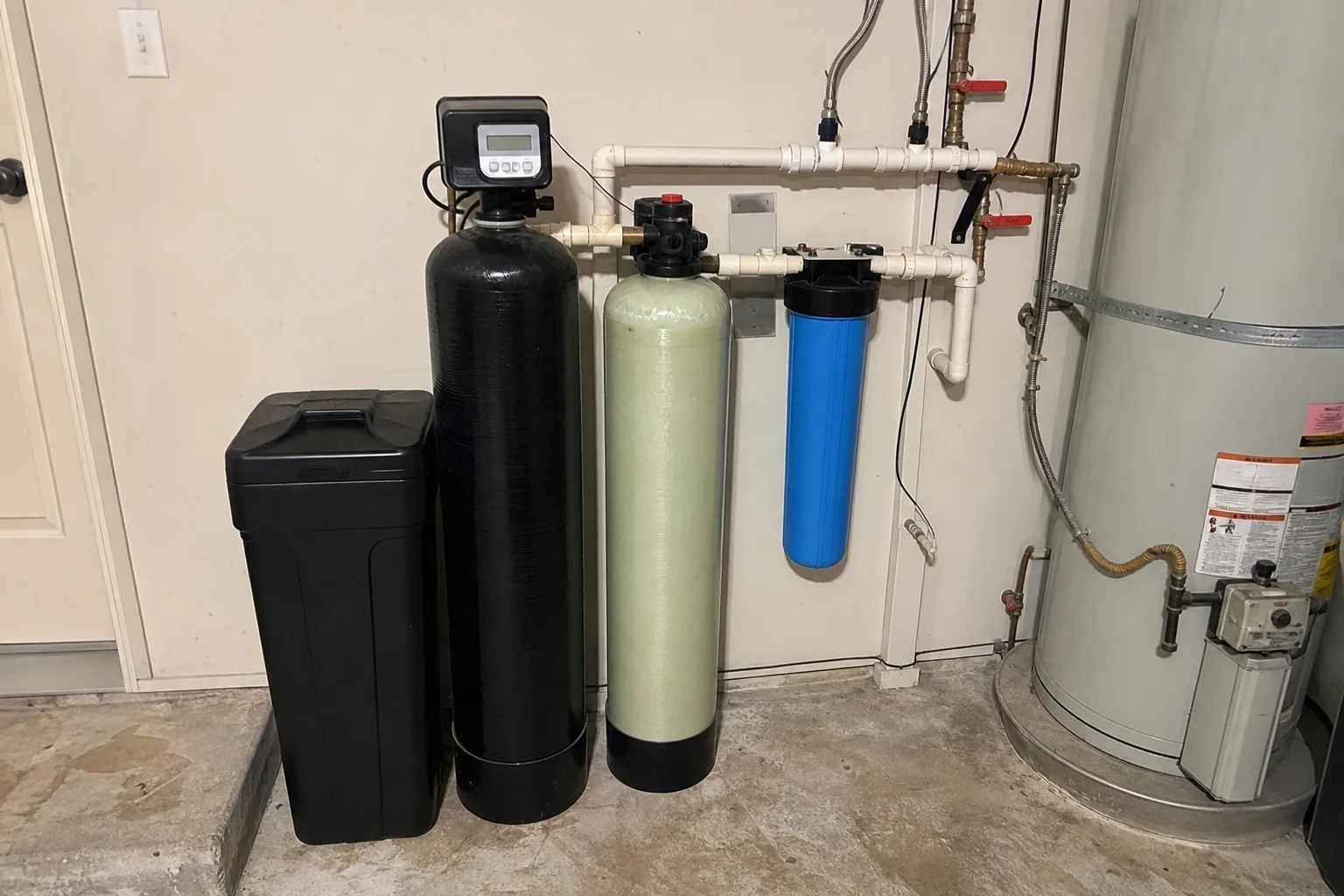
Find out what your water actually needs
A hardness reading takes the guessing out of the decision. We'll test your water, explain the result and only quote a softener if it will make a real difference.