ServicesIron and sediment filtration
Iron and Sediment Filtration in Mesquite
Orange rings in the toilet, grit in the shower head, a washer inlet screen packed with sand. We find out if the cause is sediment, dissolved iron or both, then install the filter that matches it at your main line.
Two different problems that look alike
Sediment is solid material you could catch in a sieve: sand, flakes of pipe scale, rust chips from galvanized lines, debris stirred up when a water main is repaired. Iron is often dissolved. Ferrous iron comes out of the tap clear, then oxidizes into reddish ferric iron when it meets air, which is why stains show up in the toilet tank and tub even when a glass of water looks fine.
A plain sediment cartridge stops particles but lets dissolved iron pass straight through. An oxidizing media tank handles dissolved iron but clogs fast if you send it a load of sand. That is why we test before we recommend anything, and why many homes end up with a two-stage setup: a coarse screen up front, iron treatment behind it.
Most treated city water carries little iron of its own. What we usually trace it to is older plumbing, a corroding water heater or a well, and the fix depends on which one it is.
What the installation includes
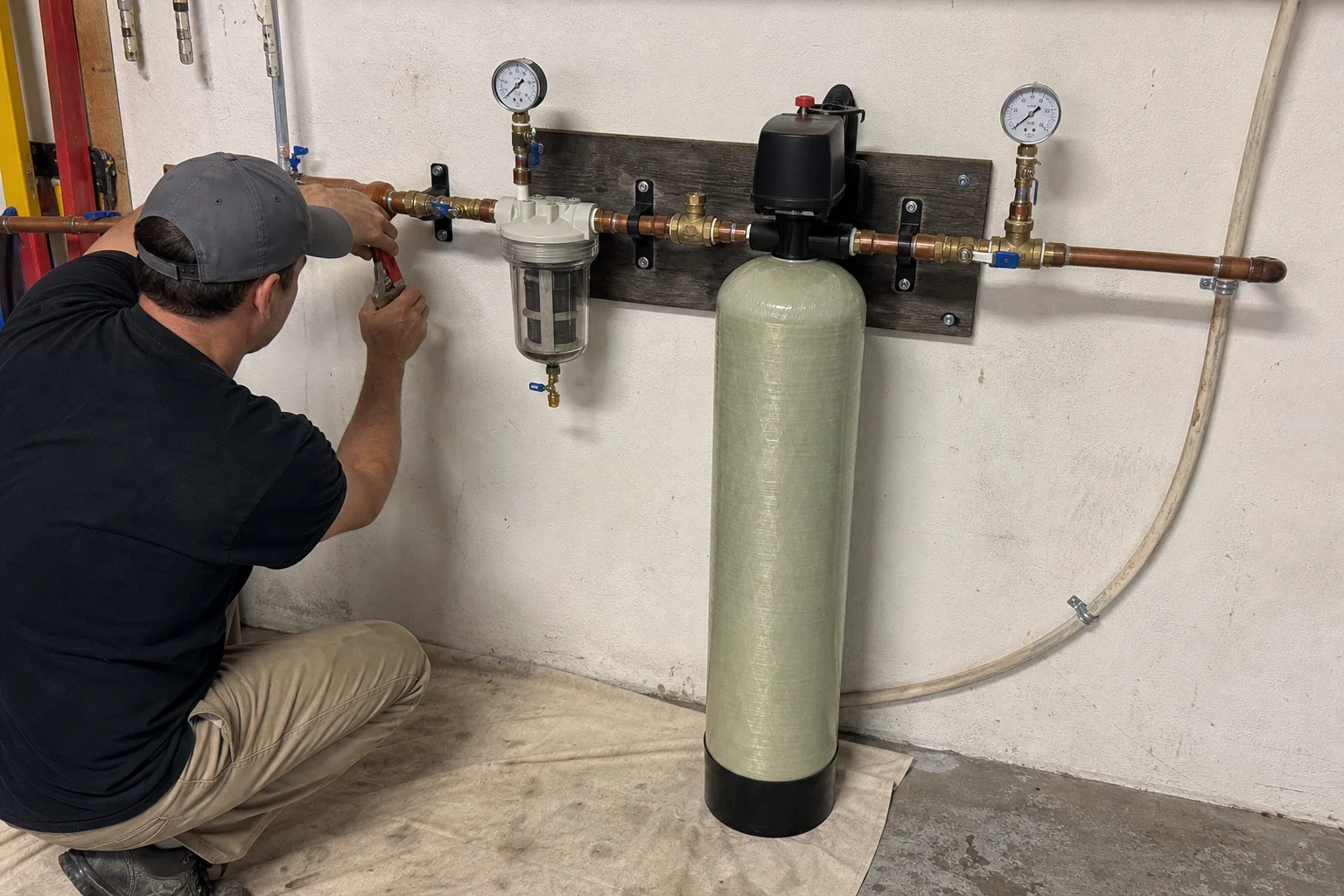
- Spin-down sediment screen
- A reusable stainless or nylon mesh screen in a clear bowl, typically 50 to 100 micron, catches sand and scale first. You can see it fill, and a flush valve at the bottom clears it in seconds.
- Cartridge housing for fine particles
- Where finer silt is the issue, we add a big-blue style housing with a pleated or string-wound cartridge, usually 5 to 20 micron. We pick the micron rating from what the test shows, because going finer than you need just shortens cartridge life and cuts pressure.
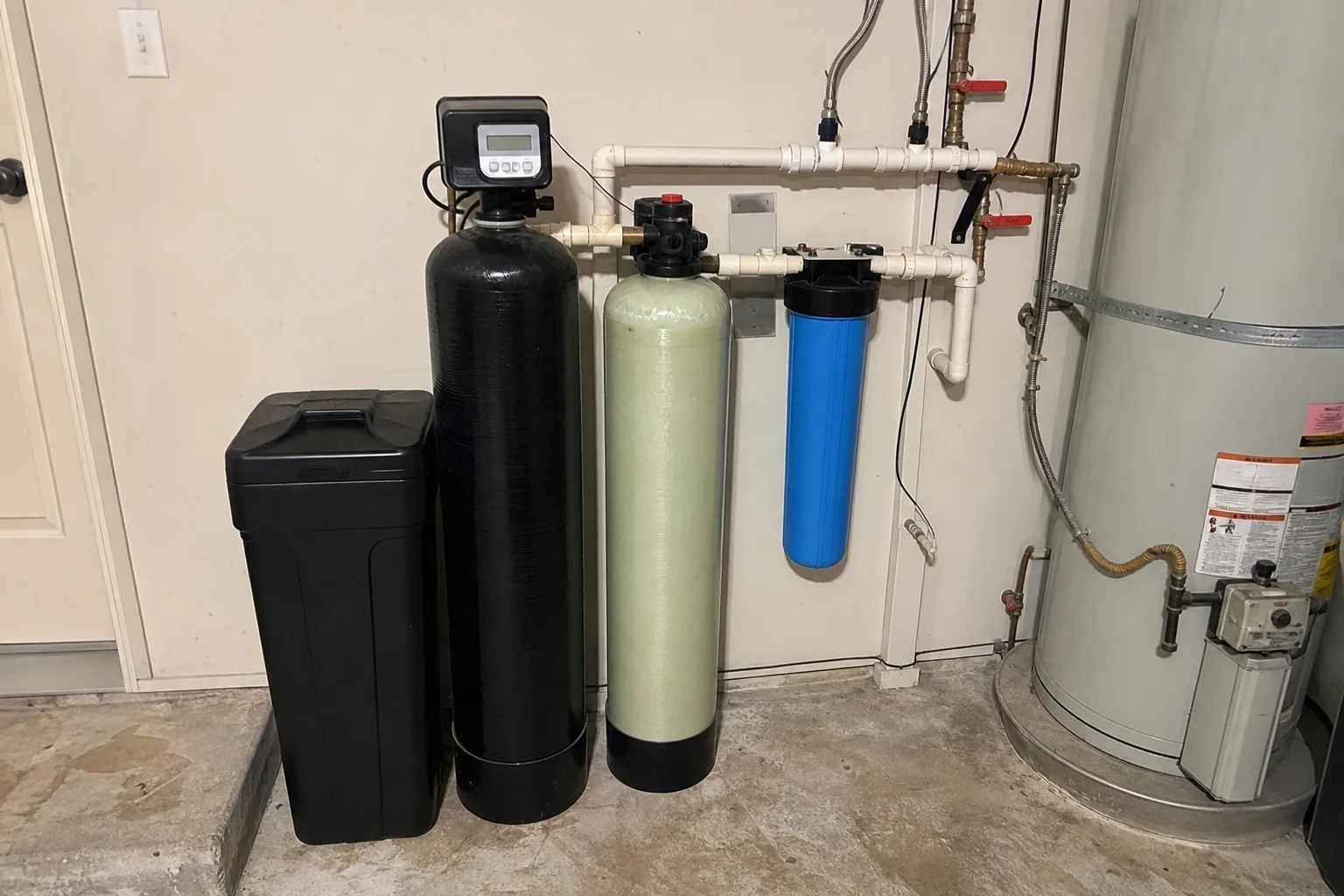
- Oxidizing media tank for dissolved iron
- For measurable ferrous iron, a backwashing tank with catalytic media or an air-injection head converts dissolved iron to particles and traps them. The control valve backwashes the bed on a schedule so the media does not plug.
- Bypass loop and before-and-after gauges
- We plumb in a three-valve bypass so your home still has water while a cartridge is swapped or the media is serviced. A gauge sits on each side of the filters, and a growing gap between the two readings tells you the cartridge is loaded and ready to change.
- Drain line and cleanup
- Backwashing tanks need a drain and a nearby outlet, which we plan before the install day. We protect the floor, haul away cut pipe and packaging, and leave the area as we found it.
Signs your water needs iron or sediment filtration
Rust-colored stains
Orange or brown rings in toilet bowls, tubs and sinks point to iron. Stains that return days after scrubbing usually mean dissolved iron oxidizing on contact with air.
Clogged aerators and shower heads
Grit packed into faucet screens and shower nozzles is sediment. Weak flow at a single fixture is often the first clue.
Yellowed laundry
Iron sets into fabric during the wash, especially with chlorine bleach, which oxidizes it right onto white clothes and towels.
Sand in appliance screens
Washer and dishwasher inlet screens that keep filling up, or a water heater that pops and rumbles from sediment buildup, are worth checking.
Metallic taste or slime
A metallic taste suggests iron. A reddish slime in the toilet tank can mean iron bacteria, which needs disinfection first, and we will tell you so instead of selling a filter that cannot fix it.
How the job runs
- 1
A call about what you are seeing
You tell us where the stains or grit show up and whether your home is on city water or a well. That alone often narrows it down.
- 2
Testing at your home
We check iron, manganese, pH and hardness, and look at what a clear-bowl sample settles out. Our water testing page covers what each result means. If the source is a failing water heater or a corroded section of galvanized pipe, we say so plainly.
- 3
A written recommendation
You get the equipment, micron ratings, where it will mount and the line items, in writing. If a spin-down screen alone will do the job, that is what we recommend.
- 4
Install day
The main gets closed first. Then the bypass loop and filter housings go in, the gauges are mounted and any drain line is run. We flush out air and fines, bring the line back up to pressure and inspect each fitting for drips. A single-stage system usually takes a few hours.
- 5
A walkthrough before we leave
We show you how to flush the screen, read the gauges and put the system in bypass. Our filter replacement and maintenance service can handle cartridge changes if you would rather not.
What moves the cost
Price depends far more on what your water test shows than on the size of your home. A sediment screen is a small job; dissolved iron treatment with a backwashing tank is a larger one. You see the line items before any work starts.
- Type and amount of iron
- Particles only need mechanical filtration. Dissolved iron, manganese or iron bacteria need oxidizing media, air injection or a disinfection step, which adds equipment.
- Flow rate
- A home with three or four bathrooms needs larger housings or a bigger media tank so pressure holds up when the shower and washer run together.
- Access at the main
- Pipe material, the space where the main enters and whether we have to reroute lines all affect labor time.
- Drain and power
- Backwashing tanks need a drain and an outlet. If neither is close, running them adds to the job.
- Ongoing consumables
- Cartridge systems need regular replacements. Media tanks cost more up front but mostly need only an occasional media change.
Iron and sediment filtration questions
Something not covered here? (972) 853-4977
Does Mesquite city water have iron in it?
Treated municipal water usually carries very little iron. When we find it, it most often comes from galvanized pipe, a water heater tank or a private well. A test tells you which, so you do not pay to treat the wrong thing.
Will I notice weaker showers after a filter goes in at the main?
With a fresh cartridge, the loss is small enough that most people never feel it at the faucet. The restriction builds as trapped grit fills the media, and the two gauges we mount let you watch that gap widen. We also keep the micron rating no tighter than your test calls for, since finer media chokes flow sooner.
Can a water softener remove iron instead?
A softener can take out small amounts of dissolved ferrous iron, but iron fouls the resin over time and it does nothing for sand. If your hardness test supports a softener anyway, we often place an iron or sediment stage ahead of it to protect it.
How often will I swap out a cartridge?
That comes down to the load of grit and scale your water brings in. Some homes go several months between changes, while others need them sooner, for example after a nearby main repair stirs up the line. Watch the gauges and the clear bowl rather than the calendar, and you will change it when it is actually full.
Do I still need a drinking water filter?
Iron and sediment filtration is about stains, grit and protecting fixtures. It does not target chlorine taste or lead from old plumbing. For that, whole-house carbon filtration or under-sink reverse osmosis is the better fit.
Find out what is in your water first
We test, show you the results and recommend only the stage your water calls for. Then we install it cleanly and show you how it works.