ServicesWater testing
Water Testing for Mesquite Homes
You should know what your water carries before anyone offers you a filter or softener. We take samples at your tap, measure the things that count and go over the results in plain language, and sometimes the honest result is that your home needs nothing at all.
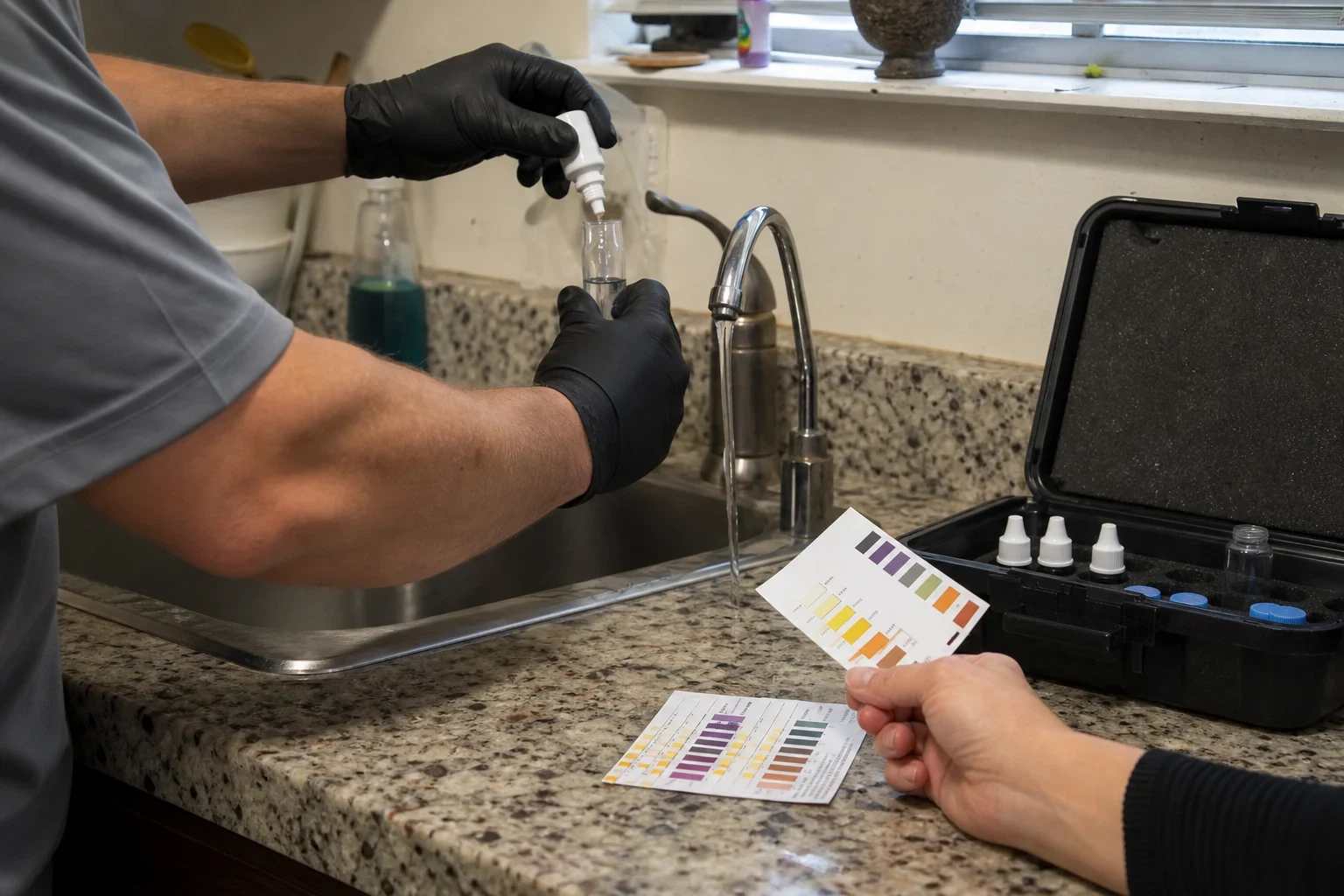
Know your numbers before you buy equipment
Water leaving the treatment plant and water coming out of your kitchen faucet are not always the same. Between the two sit miles of city main, your service line and the pipes inside your walls. Disinfectant levels drop or linger, old solder can shed metal, and minerals settle out as scale. A test at the tap shows what you are drinking, not what the utility measured upstream.
We treat a water test the way we would for a neighbor down the street. We measure, we write the results down, and we tell you which numbers are normal and which deserve attention. If a whole-house carbon filter or an under-sink reverse osmosis unit makes sense, we explain why. If the water is fine, we say so and leave it there.
What we measure during a visit
Calcium and magnesium hardness
Hardness is reported in grains per gallon and tells you whether a softener deserves a second look. Many homes never need one, and a measured figure settles the question.
Iron and manganese
Even small amounts of dissolved iron oxidize into orange stains on sinks and laundry. We check the level so any iron and sediment filtration is sized to the real load.
Chlorine or chloramine residual
City water carries a disinfectant on purpose. We measure how much reaches your tap, which tells us whether carbon filtration would change the taste and smell you notice.
pH and total dissolved solids
Low pH water is more aggressive toward copper pipe, and a high TDS reading hints at what else is dissolved. Both help explain symptoms like blue-green stains or a flat taste.
Lead and copper from household plumbing
For homes with older pipe or solder, we collect a first-draw sample for lab analysis. That sample shows what leaches from your own plumbing while water sits overnight.
Written results, explained
You get every reading on paper with the normal range beside it. We go through it line by line and answer questions before any equipment comes up.
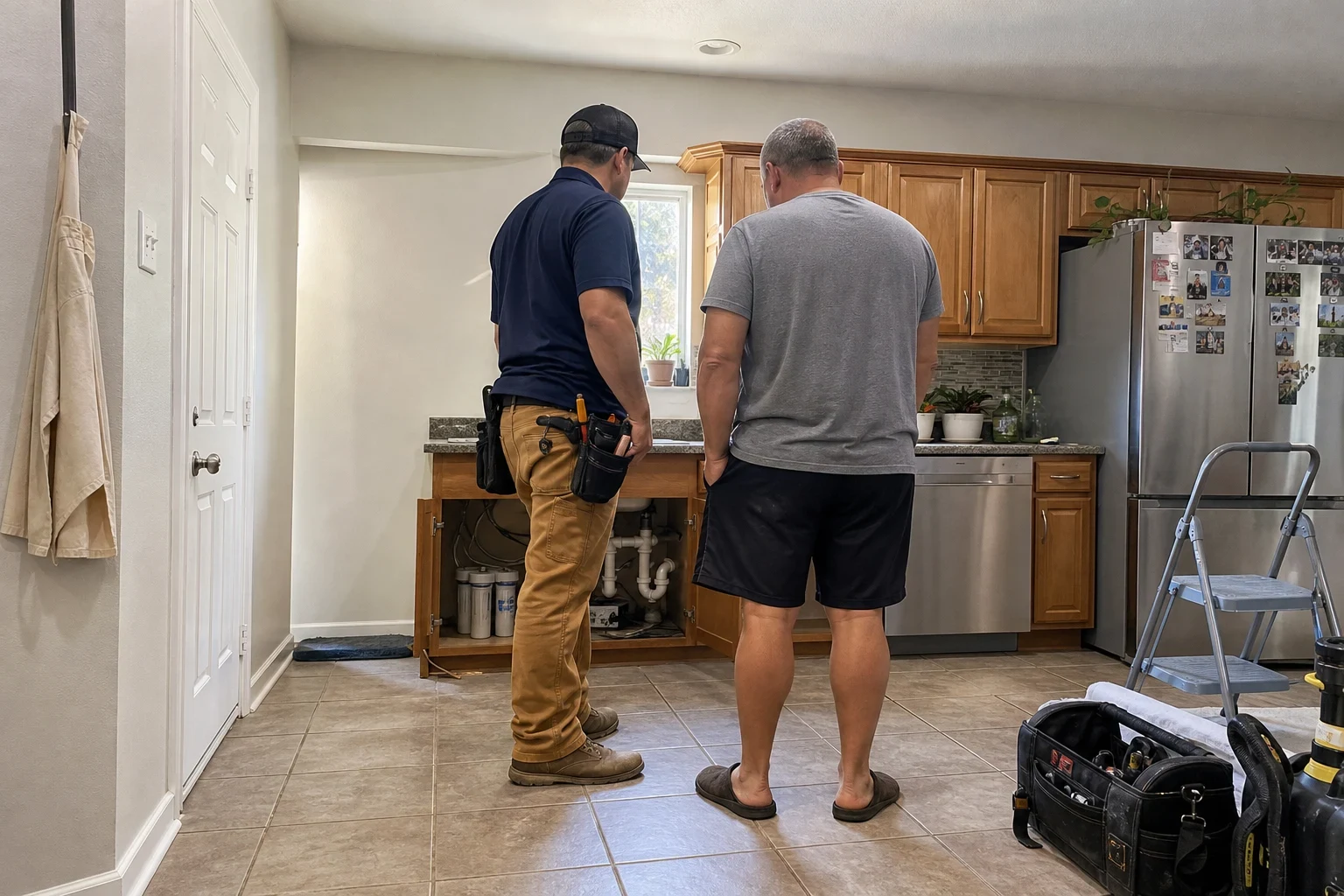
Signs it is time to test your water
- A pool-like smell at the tap
- A strong chlorine odor usually means disinfectant residual, not contamination. Testing confirms the level so you can decide whether a carbon filter is worth it.
- Orange or brown stains
- Rust-colored rings in toilets and tubs point to iron, either in the supply or from corroding galvanized pipe. The test tells us which, and the fix differs.
- White crust on faucets and shower heads
- Scale forms when calcium carbonate drops out of heated or evaporating water. Measuring hardness shows whether it is a nuisance or a real load on your water heater.
- Your home has older plumbing
- Lead solder was common on copper water lines before the federal ban in 1986. If your home predates that or you are not sure, a first-draw lead test is a sensible step.
- Someone already quoted you a softener
- Get an independent hardness number before you sign. Equipment should match measured water, not a sales pitch.
How a test visit works
- 1
Start with a call
Describe what you see, smell or taste at the tap, and roughly when your house was built. From that we pick the tests that fit. If lead is on the list, we explain how to let the water sit unused for six hours or more before the visit.
- 2
Sampling at your tap
We draw samples at the kitchen faucet and, when it helps, a bathroom or the hose bib before any existing filter. On-site readings for hardness, iron, pH, TDS and disinfectant take only a few minutes.
- 3
Lab work where it matters
Lead and copper samples go to an outside lab, because those numbers need lab precision. We let you know when to expect them.
- 4
Results and a straight recommendation
We review every reading with you and give one of three answers: no treatment needed, a simple point-of-use fix, or a whole-house system. You decide, with no pressure from us.
What affects the cost of water testing
Testing is priced by what we measure, not by what we hope to sell afterward. A quick screen for taste and hardness costs less than a full panel with lab work. We give you the price by phone before we come out.
- On-site versus lab analysis
- Hardness, iron, pH and chlorine can be read at your tap. Lead and copper require sending samples to a lab, which adds to the cost.
- Number of taps sampled
- One kitchen sample covers most questions. Testing before and after an existing filter, or at several fixtures, takes more time and materials.
- Follow-up retesting
- After new equipment goes in, a second test confirms it is doing its job. Some homeowners also retest after plumbing repairs.
Water testing questions
- The city already tests the water. Why test my home?
- The utility tests at the plant and at points across the system, and it reports results publicly. It cannot see your service line, your solder joints or your water heater. A tap test shows what changes between the main and your glass.
- Will you try to sell me a filter after the test?
- We will tell you what the numbers support. If your water reads normal, our recommendation is to leave it alone. When treatment makes sense, we explain which problem it solves and why.
- Do I really need a softener?
- Not always. Many homes in Mesquite and nearby towns get by fine without one. Our water softeners page explains the process, but the decision should start with a measured hardness number in grains per gallon.
- How long until I get results?
- The on-site readings are ready before we leave. Lab results for lead and copper take longer, and we tell you the expected timing at the visit and go over them with you when they arrive.
- What is a first-draw sample?
- It is the first water out of the tap after it has sat unused in your pipes for six hours or more, usually overnight. That still water has had time to pick up metals from the plumbing, so it shows the worst case for lead and copper.
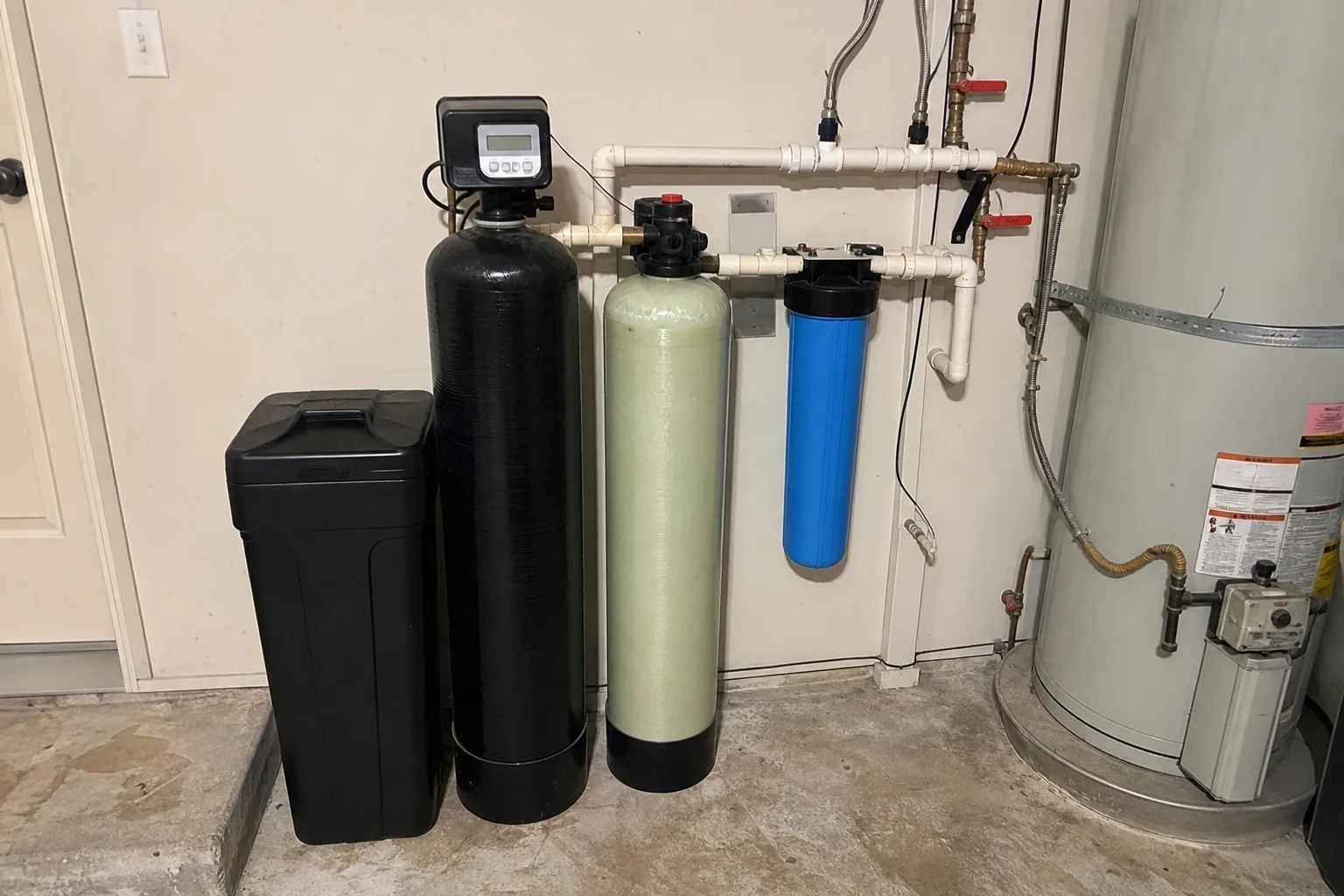
Get a reading before you buy anything
Measured water makes every later decision easier, from a carbon filter to doing nothing at all. Let us know what you have noticed at the tap, and we will put together the tests that answer it.